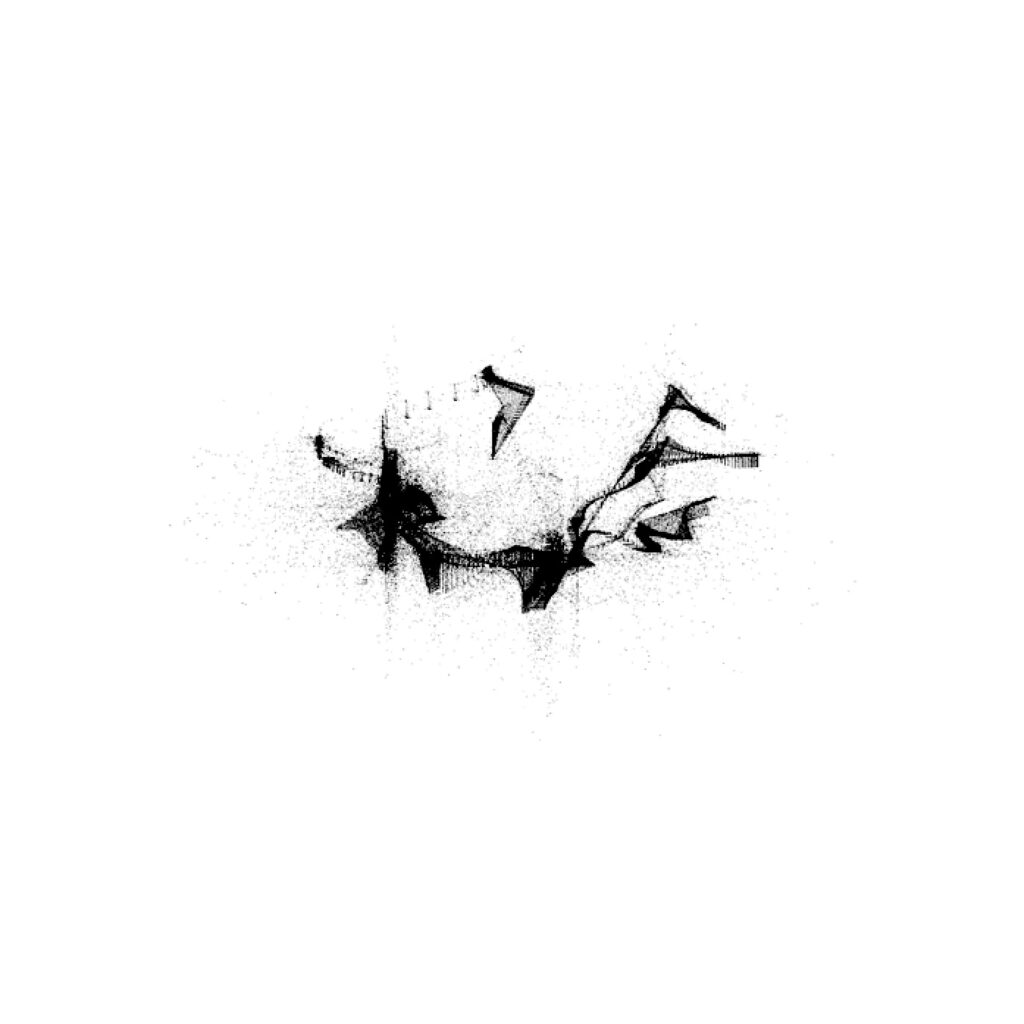
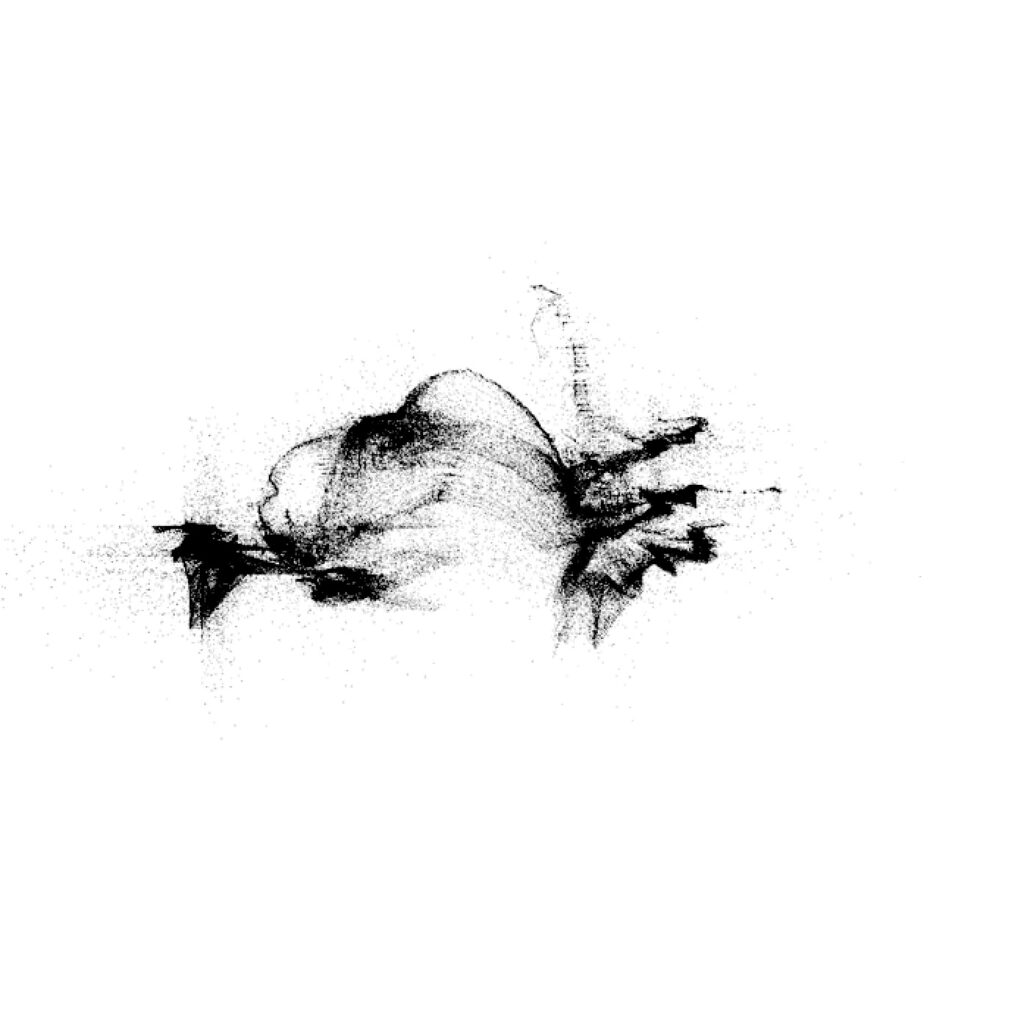
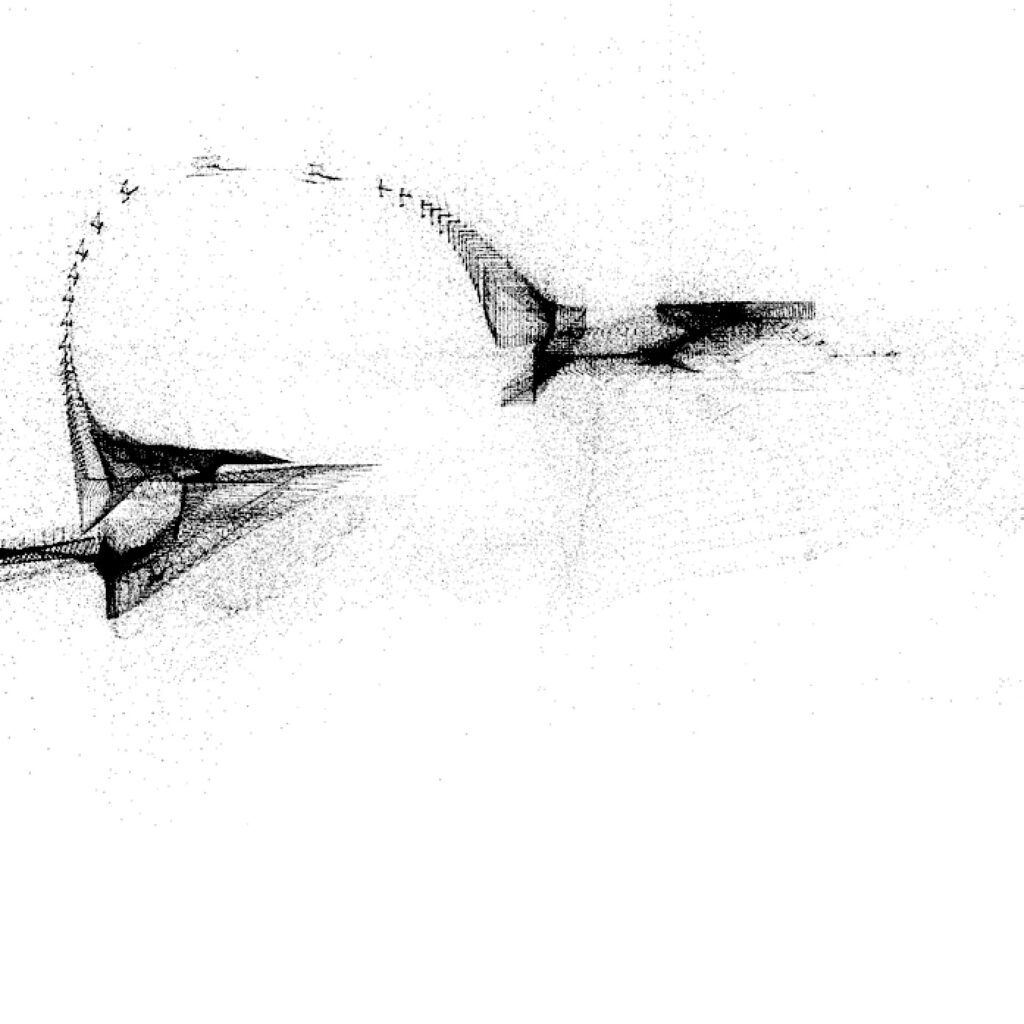
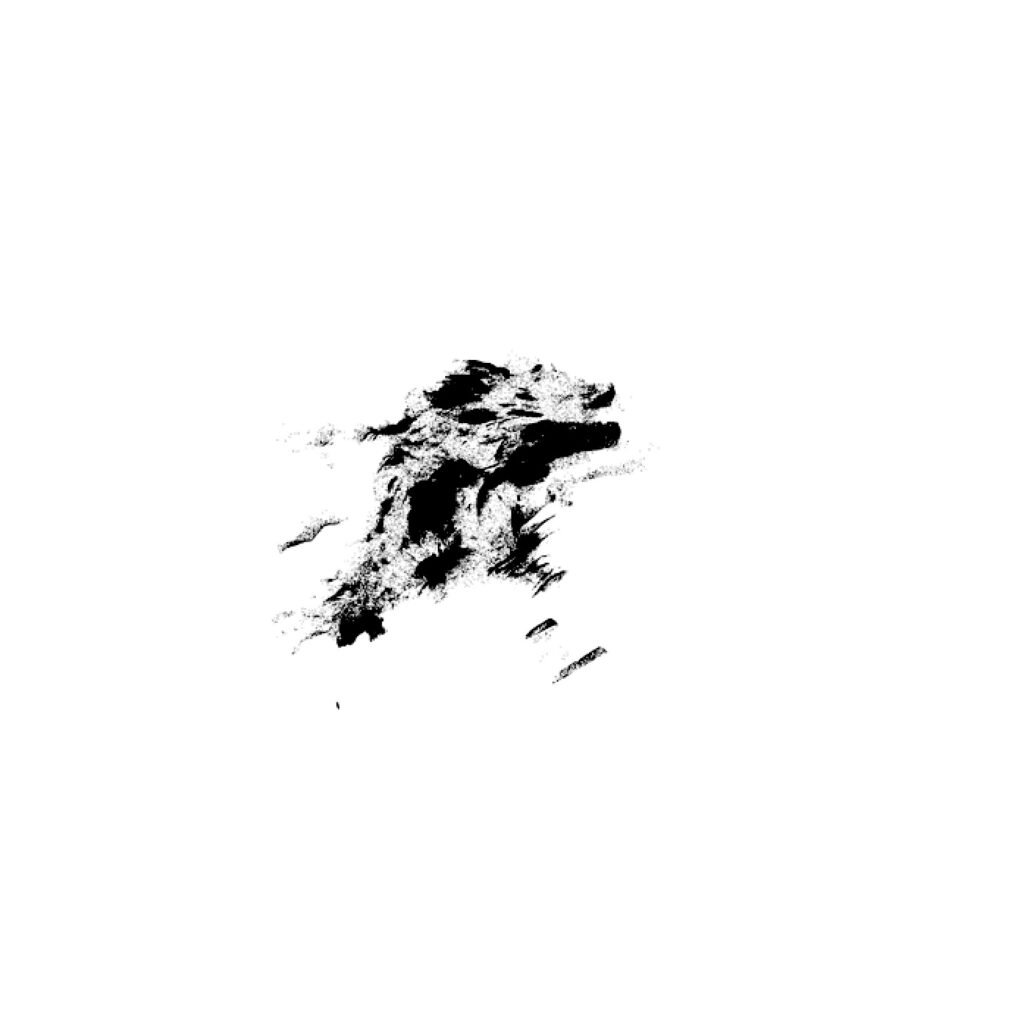
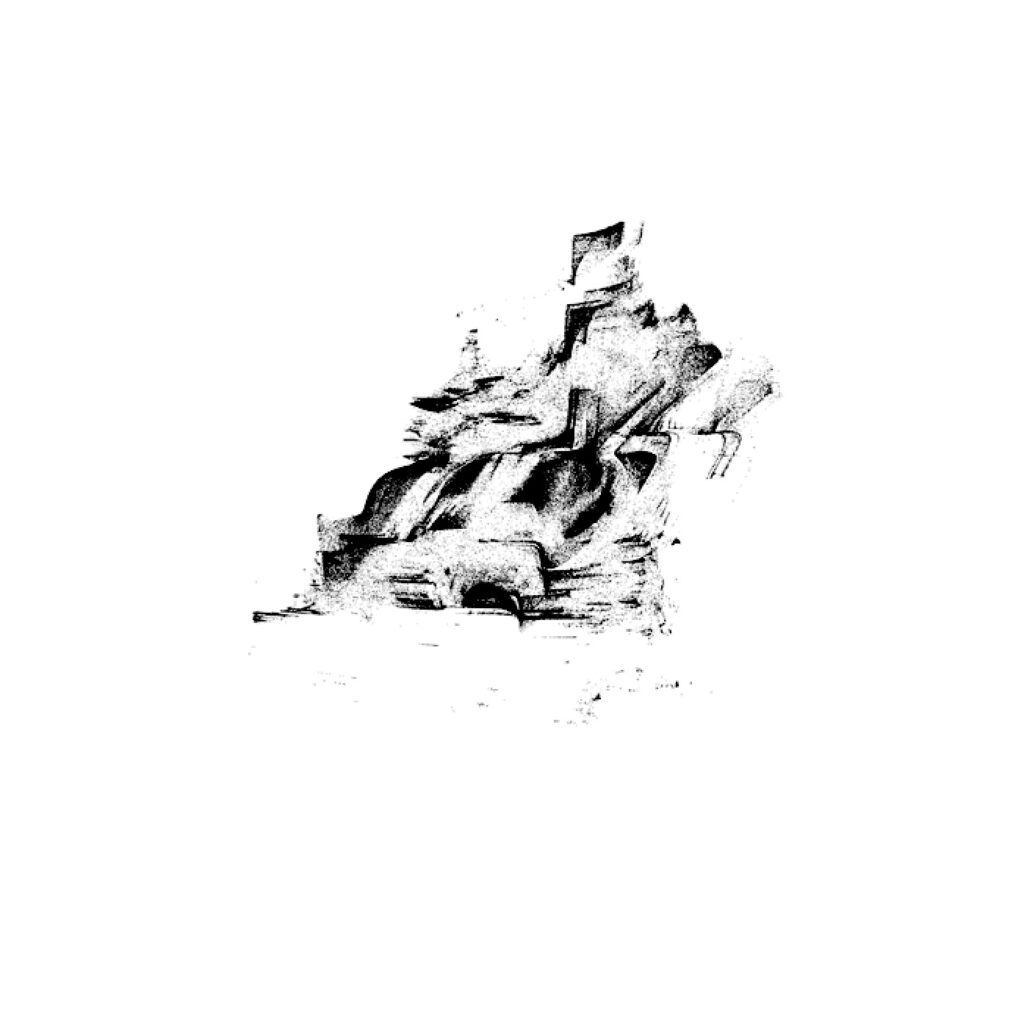
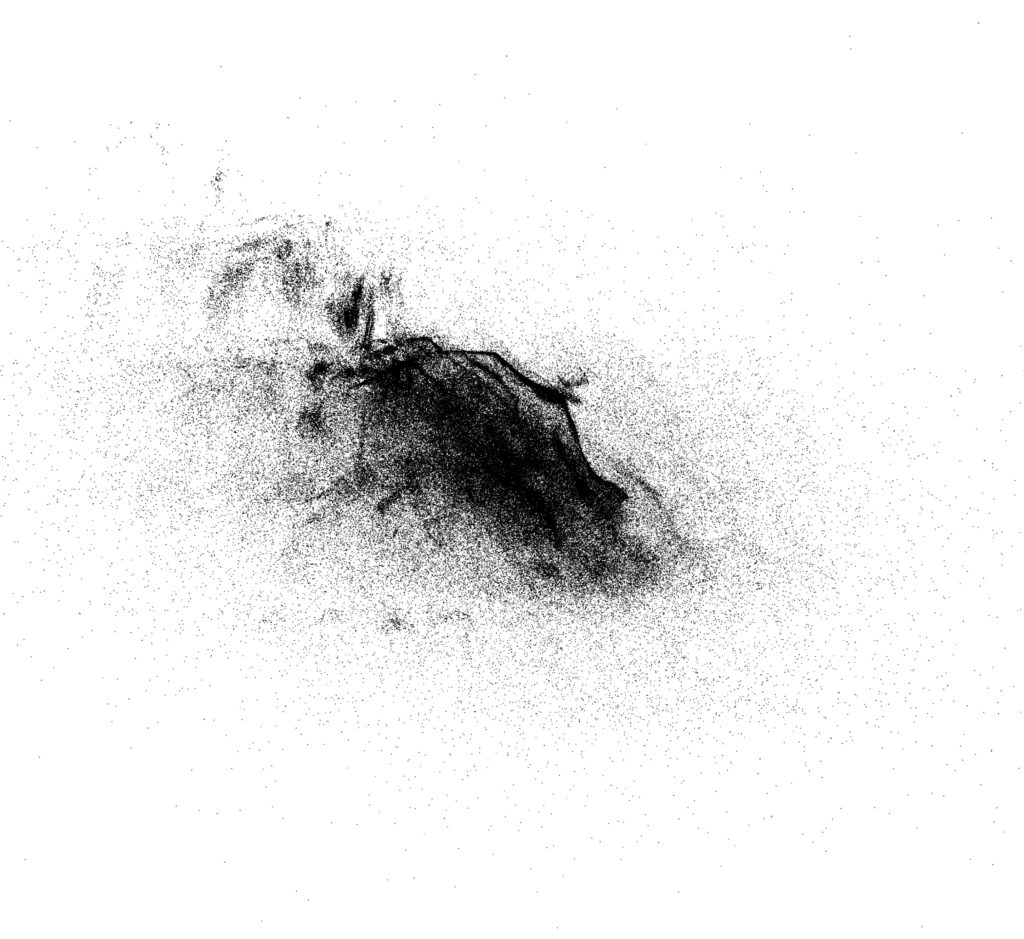
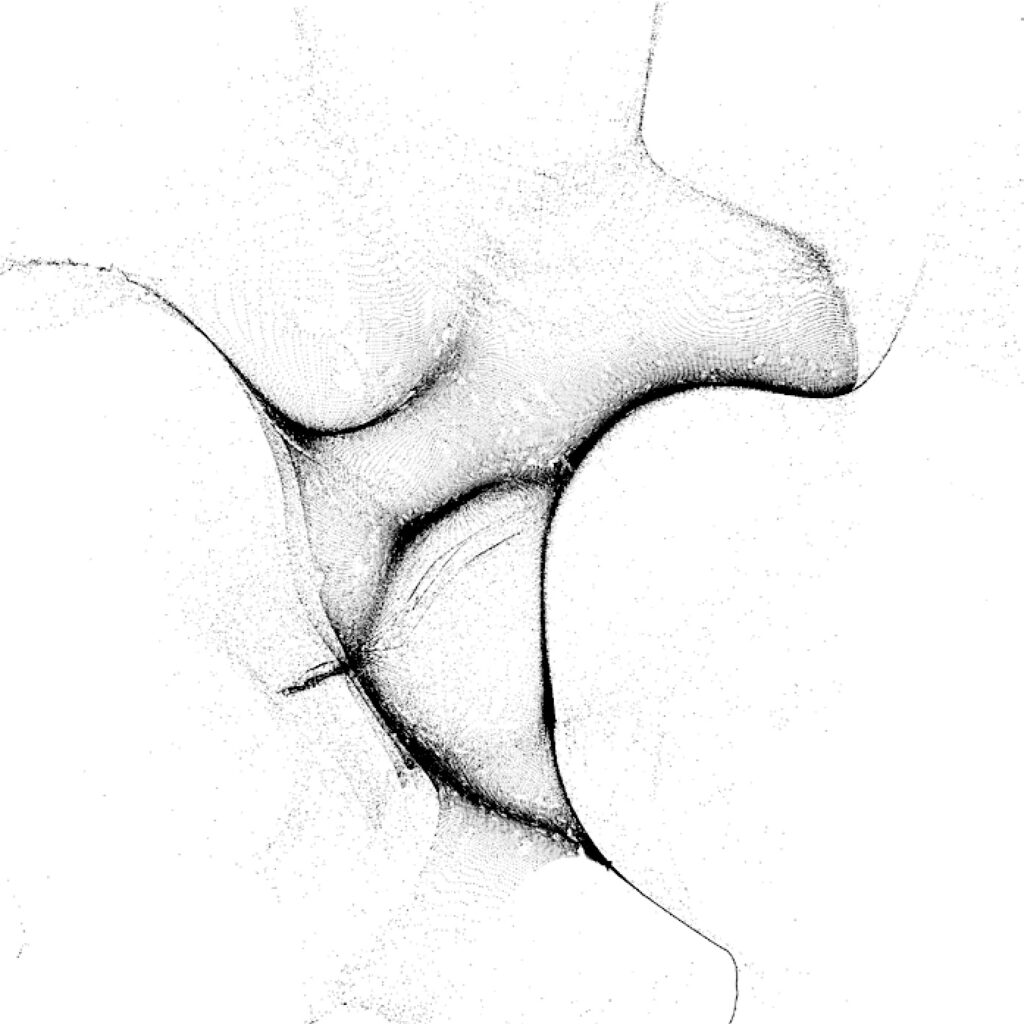
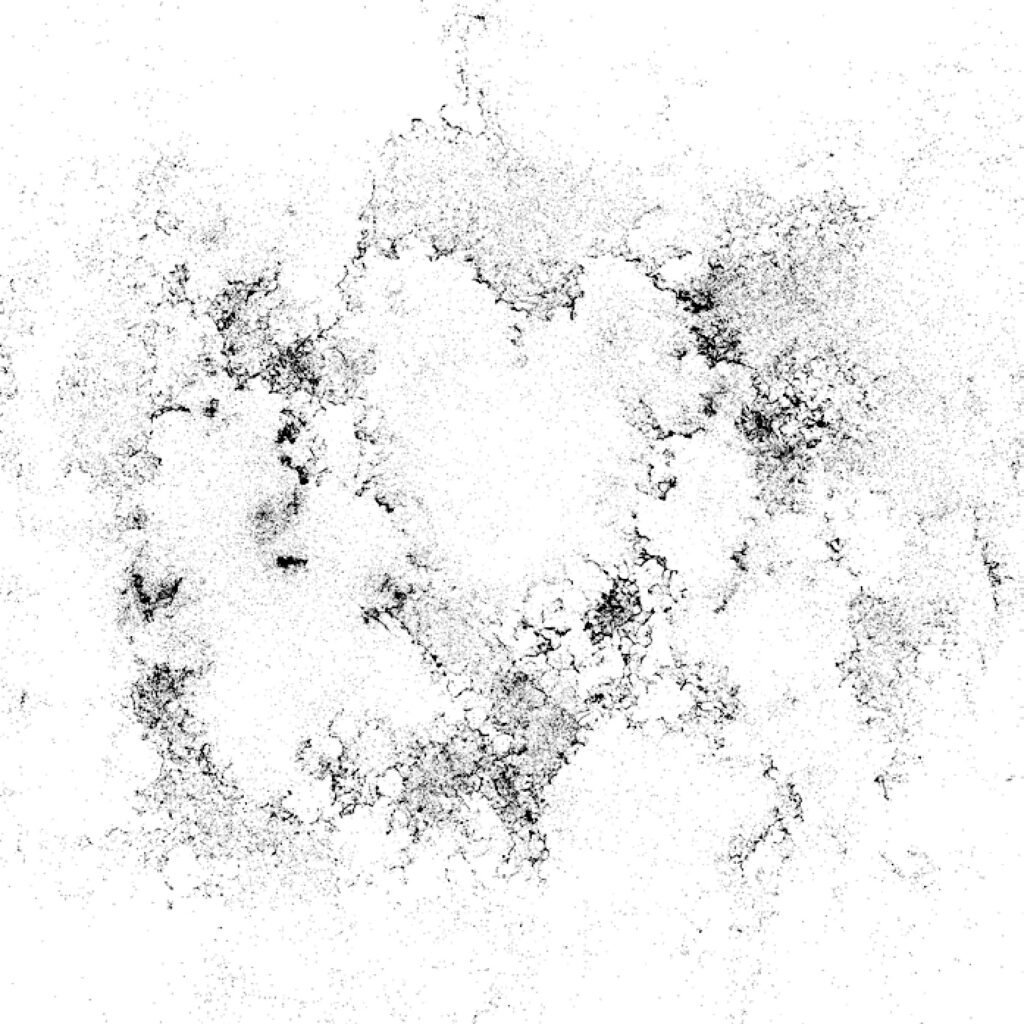
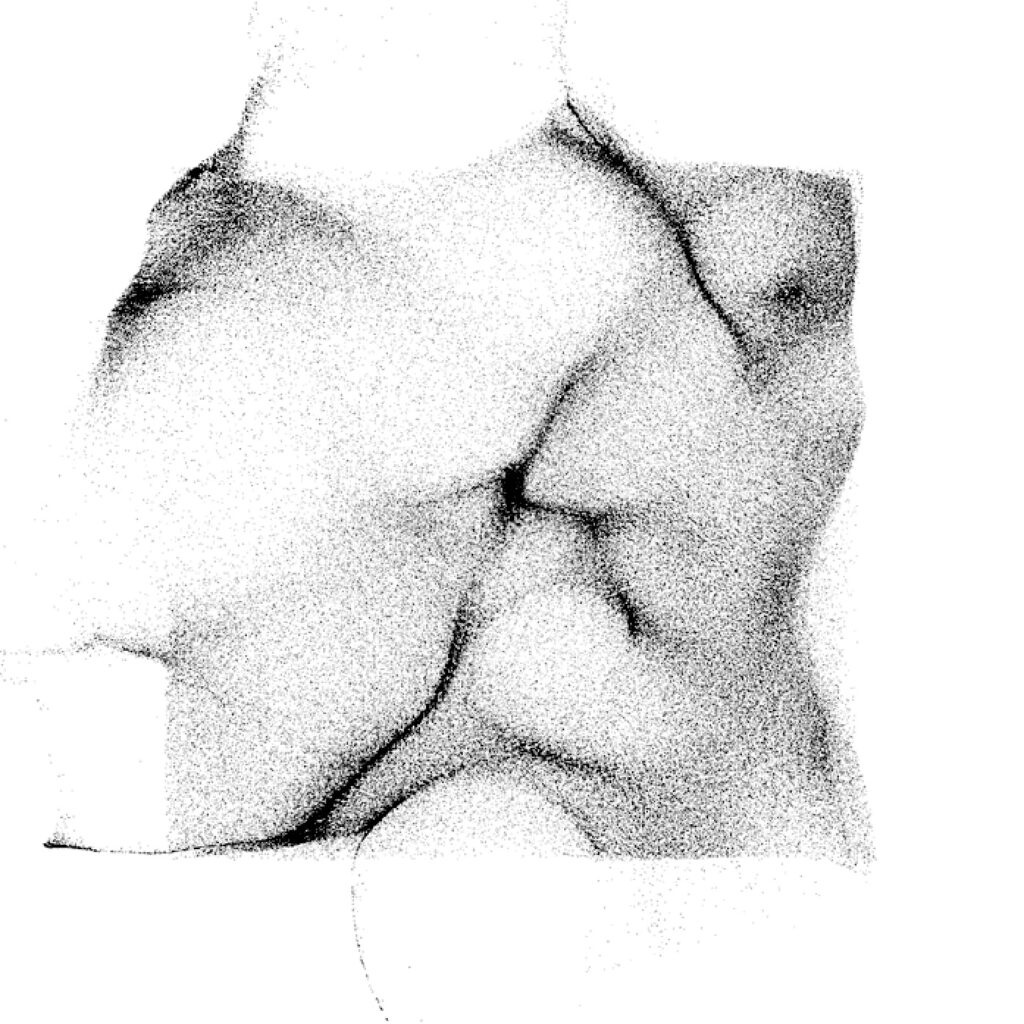
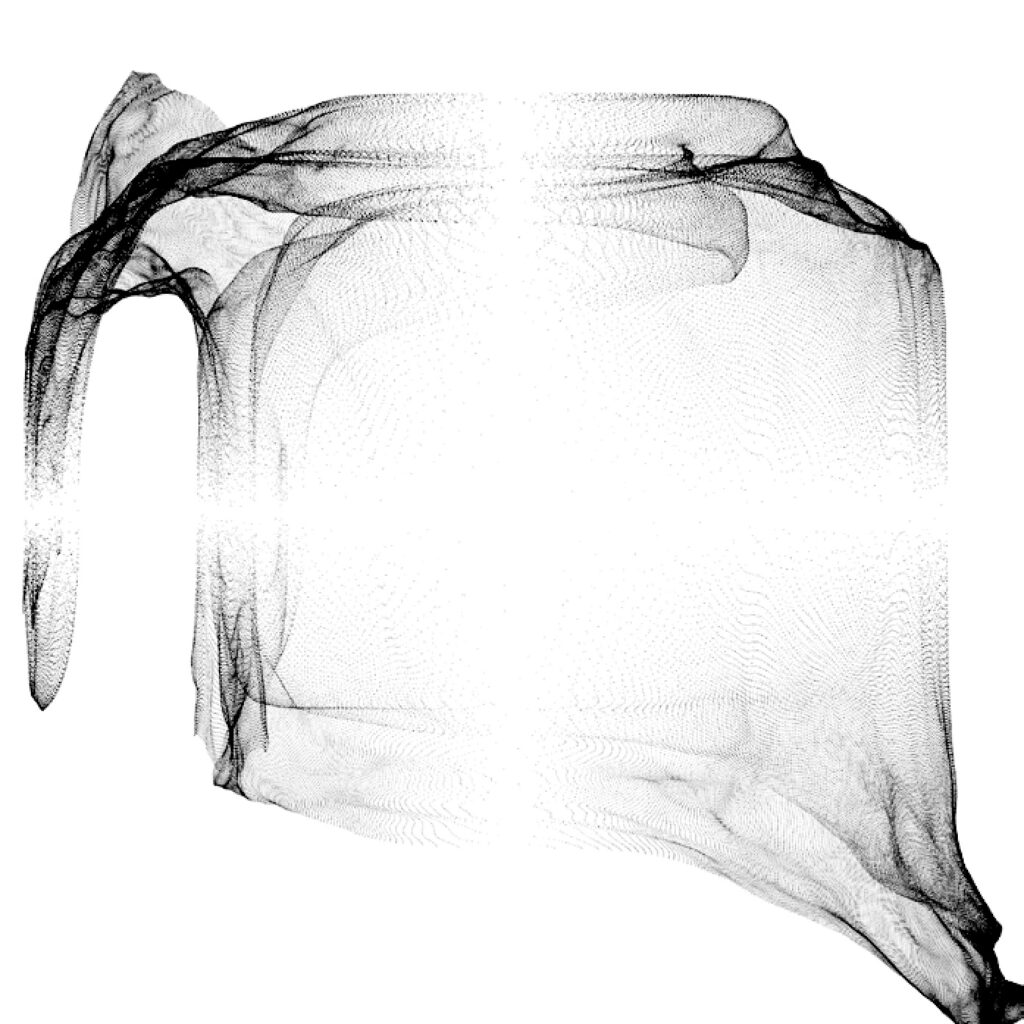
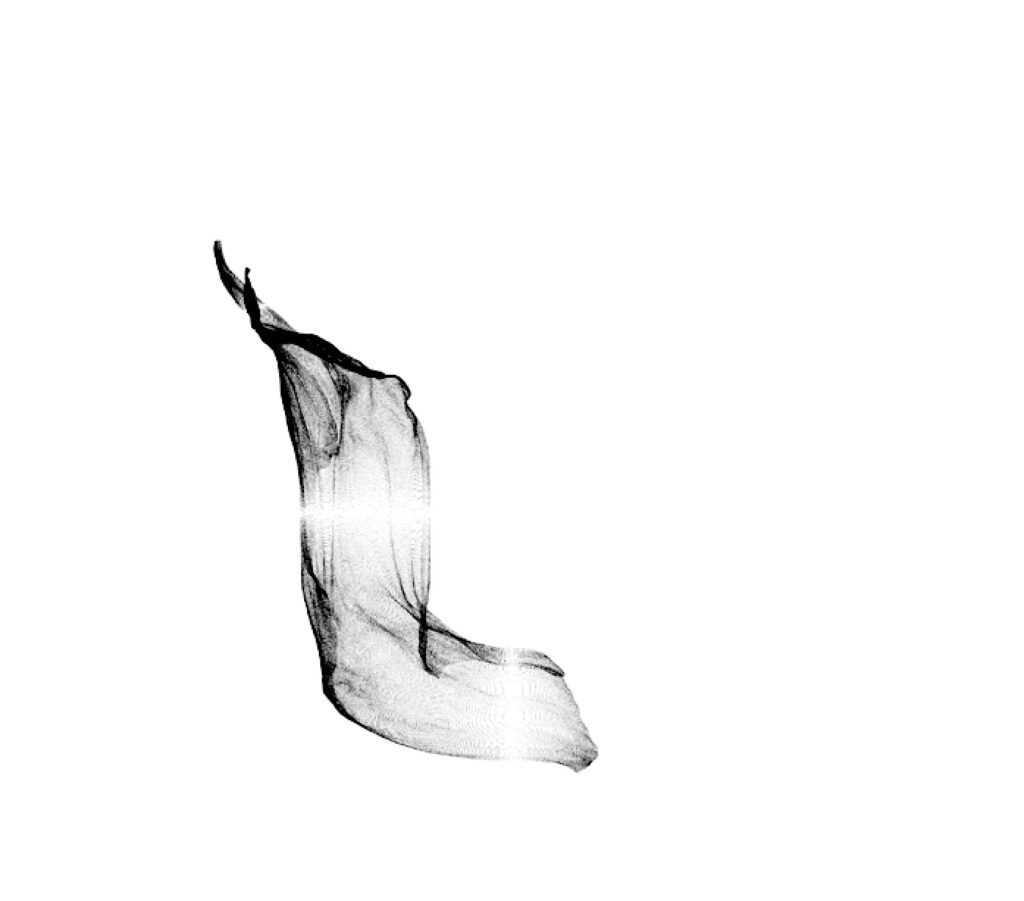
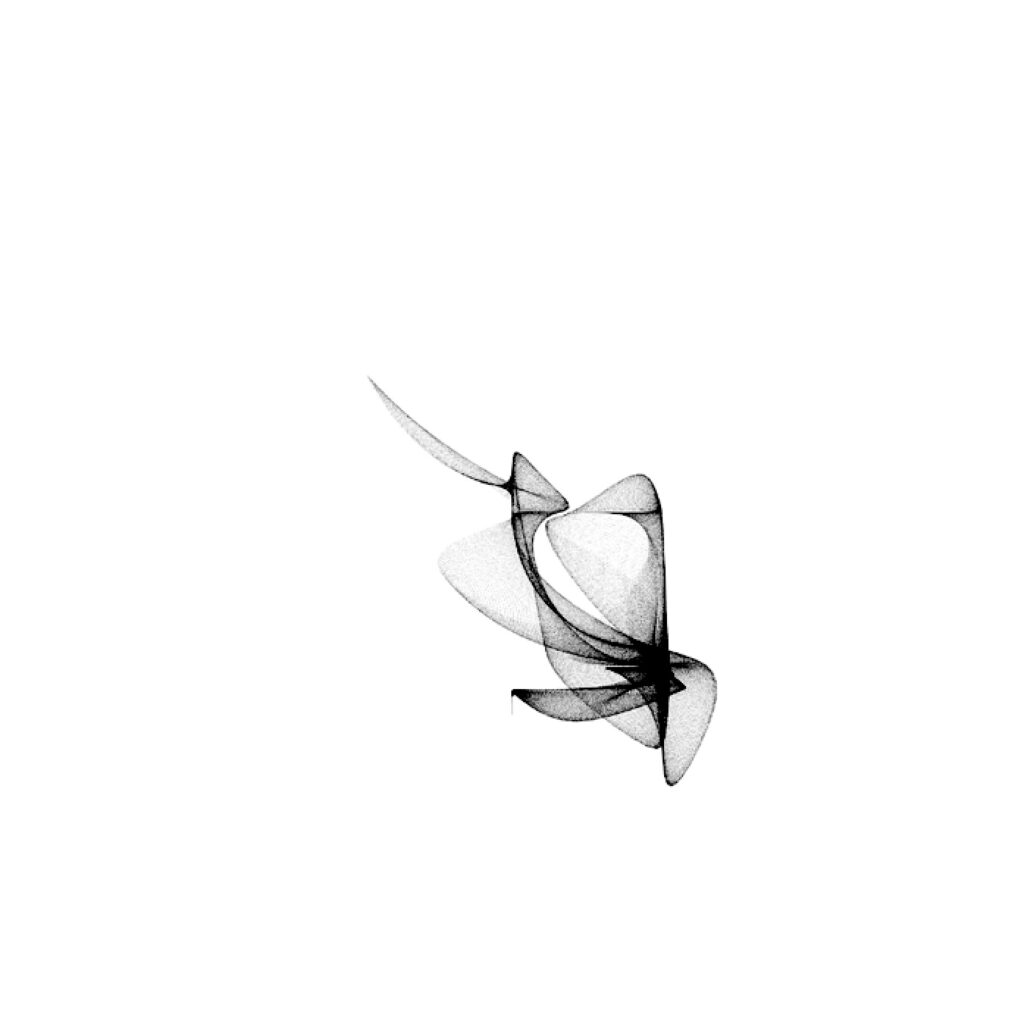
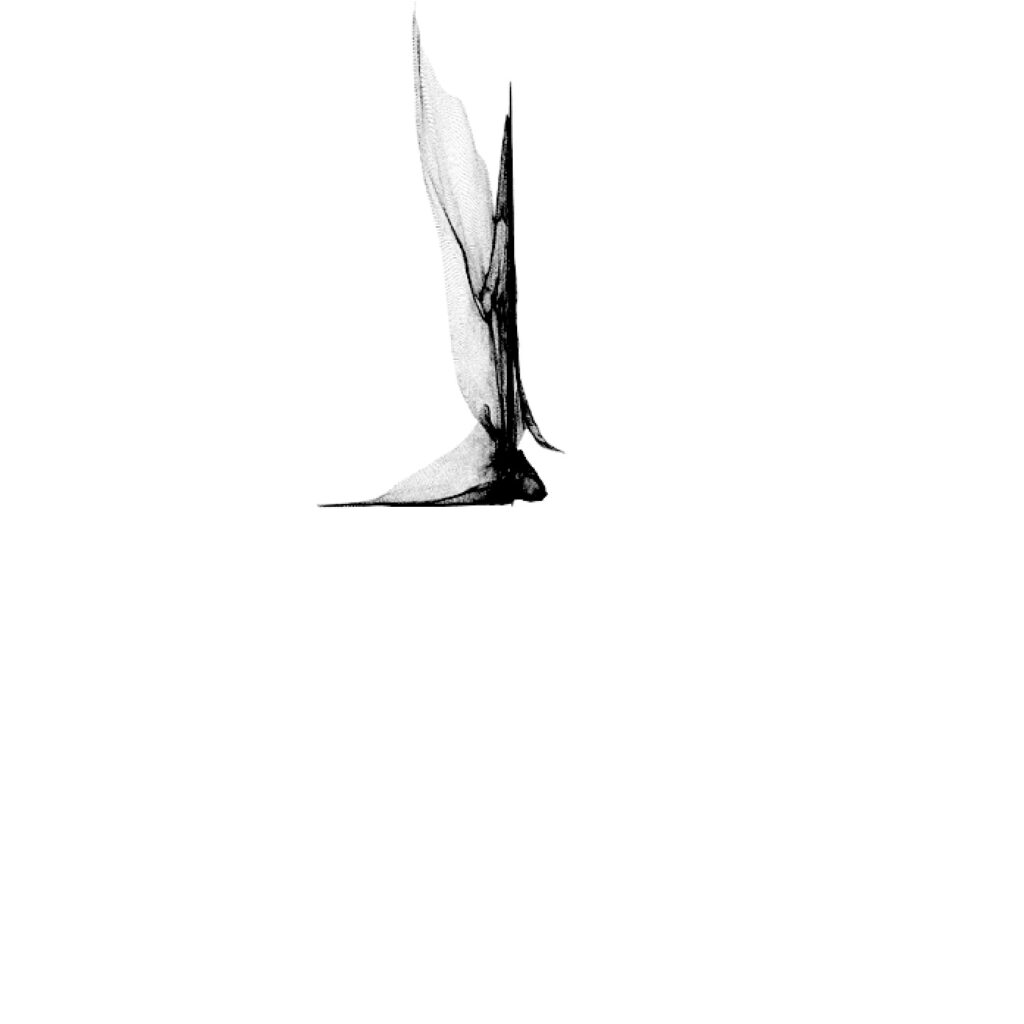
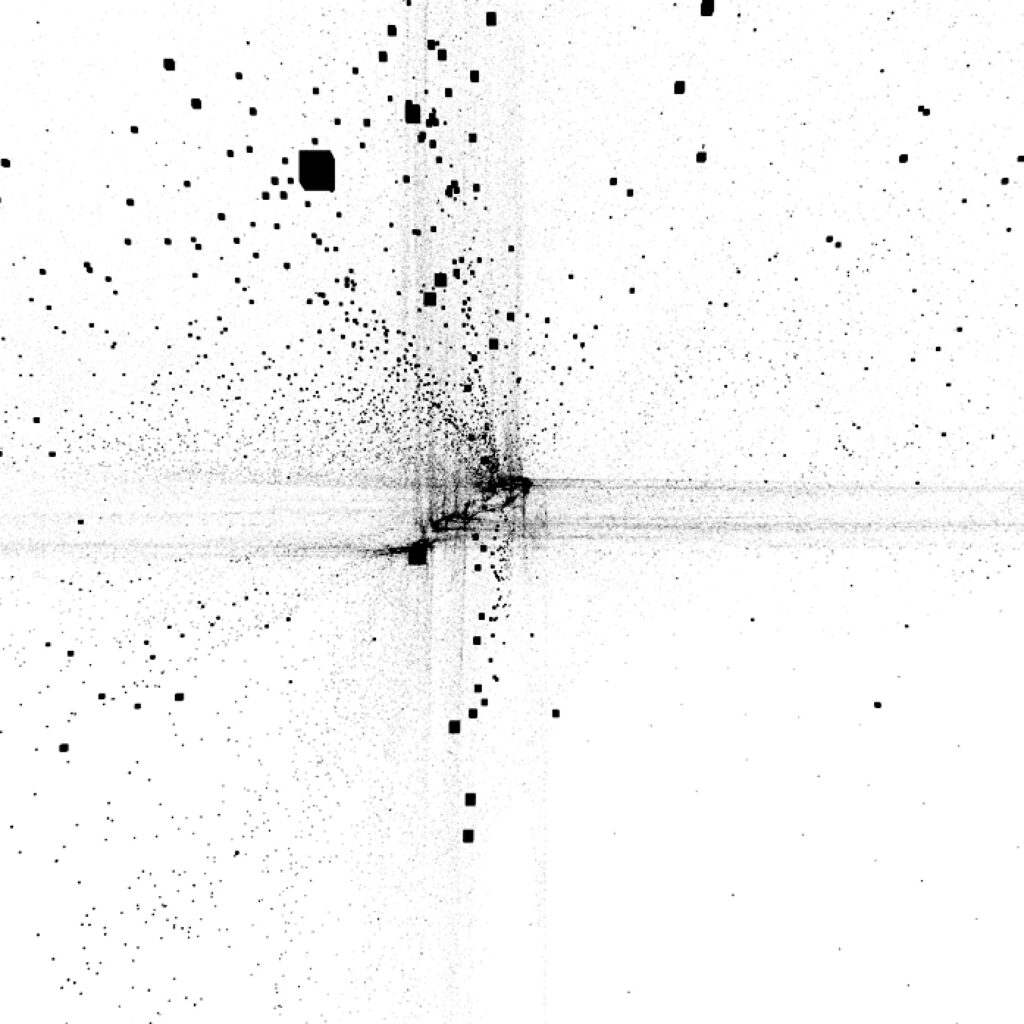
Digital systems tend toward exactness. Outputs are reproducible, and behavior is deterministic. Natural phenomena, however, operate in a different register: a cloud formation looks different each time you observe it, and sustains attention in a way that most screen content does not. Rauschen was built to examine what it takes for computer-generated forms to cross that threshold.
The written component of the thesis traced the history of noise functions in generative art, from Frieder Nake and Vera Molnár in the 1960s through Ken Perlin's development of Perlin Noise in 1983, to its successive elaborations: Simplex, Cellular, Fractal Brownian Motion, and Flow Noise. Each stage shifted the statistical distribution of randomness and with it the perceptual character of the output. To understand these functions, I rebuilt each one from scratch during the research process, though the final installation uses established implementations.
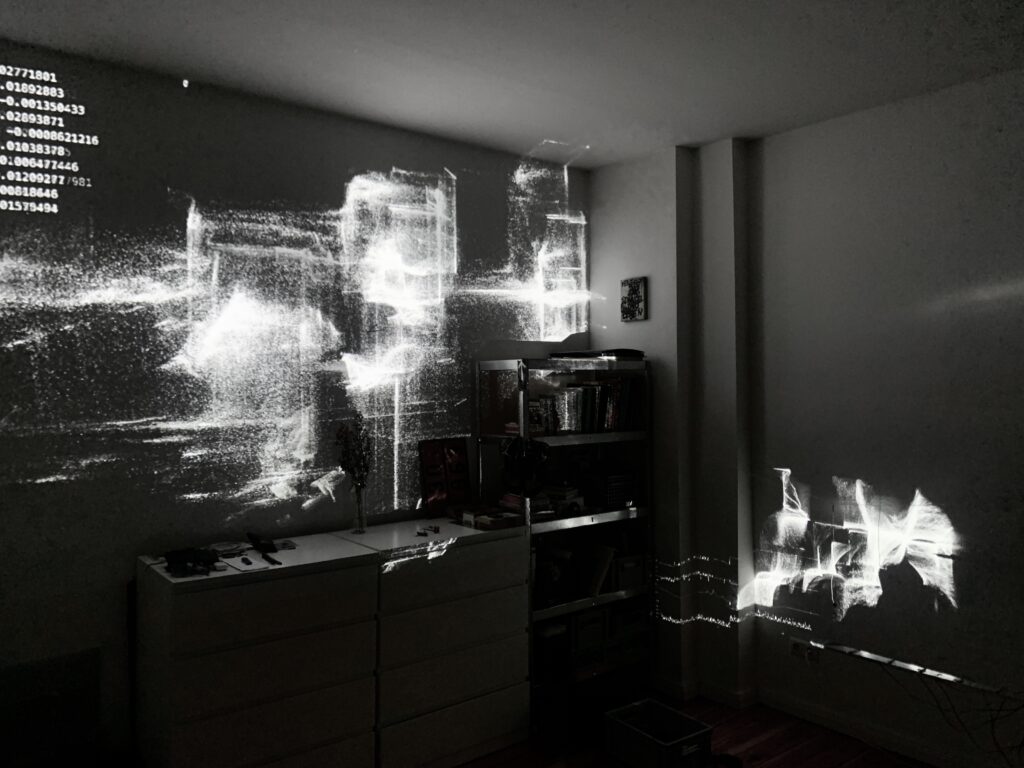
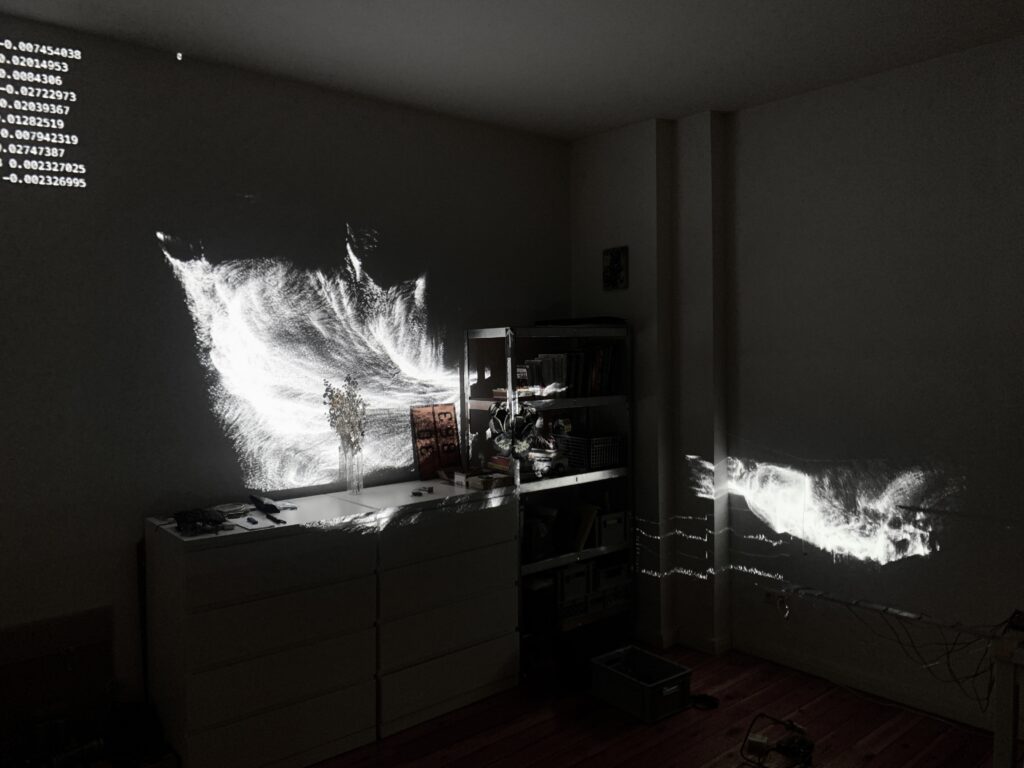
The corresponding installation extends this into physical space. Multiple microphones and light sensors, distributed throughout the room and connected via Raspberry Pi Picos over I2C, read the environment in real time. Their values drive a GPU-instanced particle system of approximately 3,5 million particles across a three-channel projection, rendered in black and white. The system responds to its surroundings. A visitor casting a shadow on a floor sensor shifts the field, but never deterministically. The same input produces different results over time.
This opacity was deliberate. The piece behaves like an animal. It reacts to stimuli, but the causal logic stays hidden.
Bachelor Thesis, TH Augsburg, 2023, Grade: 1.3