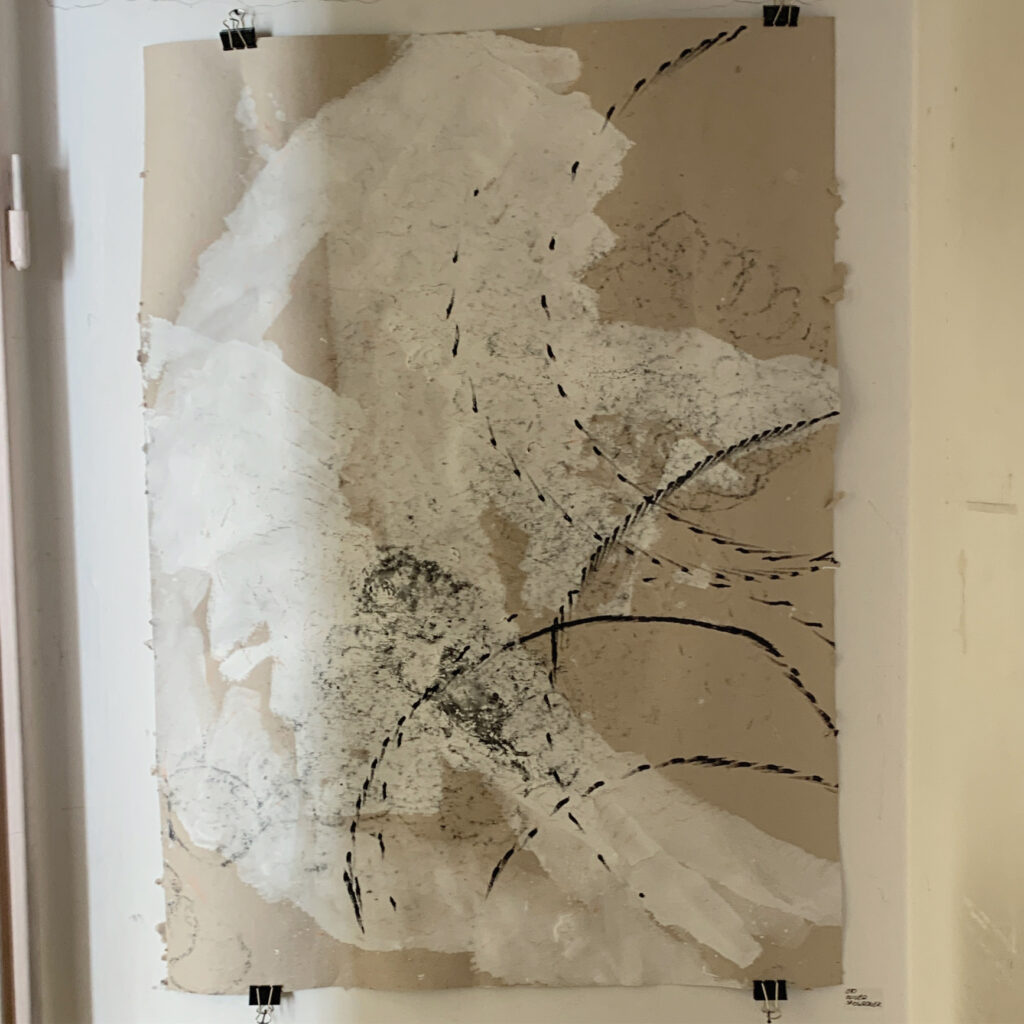
A significant part of contemporary urban space is organized by electromagnetic signals such as WiFi, cellular networks, broadcast radio, and emergency services. These signals structure the environment and are imperceptible without instruments. Ambient Listener was built to make this landscape visible.
A rotating motor arm draws on paper in direct response to the measured field strength. A broadband receiver measures signal intensity; a PWM module converts this to voltage; the voltage drives a motor; the motor moves the arm. Operating without a microcontroller or software, the machine has no representation of what it is measuring.
This turned out to matter unexpectedly: the produced drawings were interesting, but the more expressive element was the machine's behavior, especially how it moved through space over time. Dense signal environments produced frantic movement; quiet ones produced something slow and circling. Behavior tracked the invisible field more directly than the marks left on paper. The drawing became documentation of behavior, while behavior itself was the primary output.
The decision to use only analog electronics was deliberate: no digital mediation layer in a piece about invisible digital infrastructure. The machine is moved by signals it cannot parse.
Ambient Listener was made in 2019 and exhibited at Discovered Space Augsburg the same year.